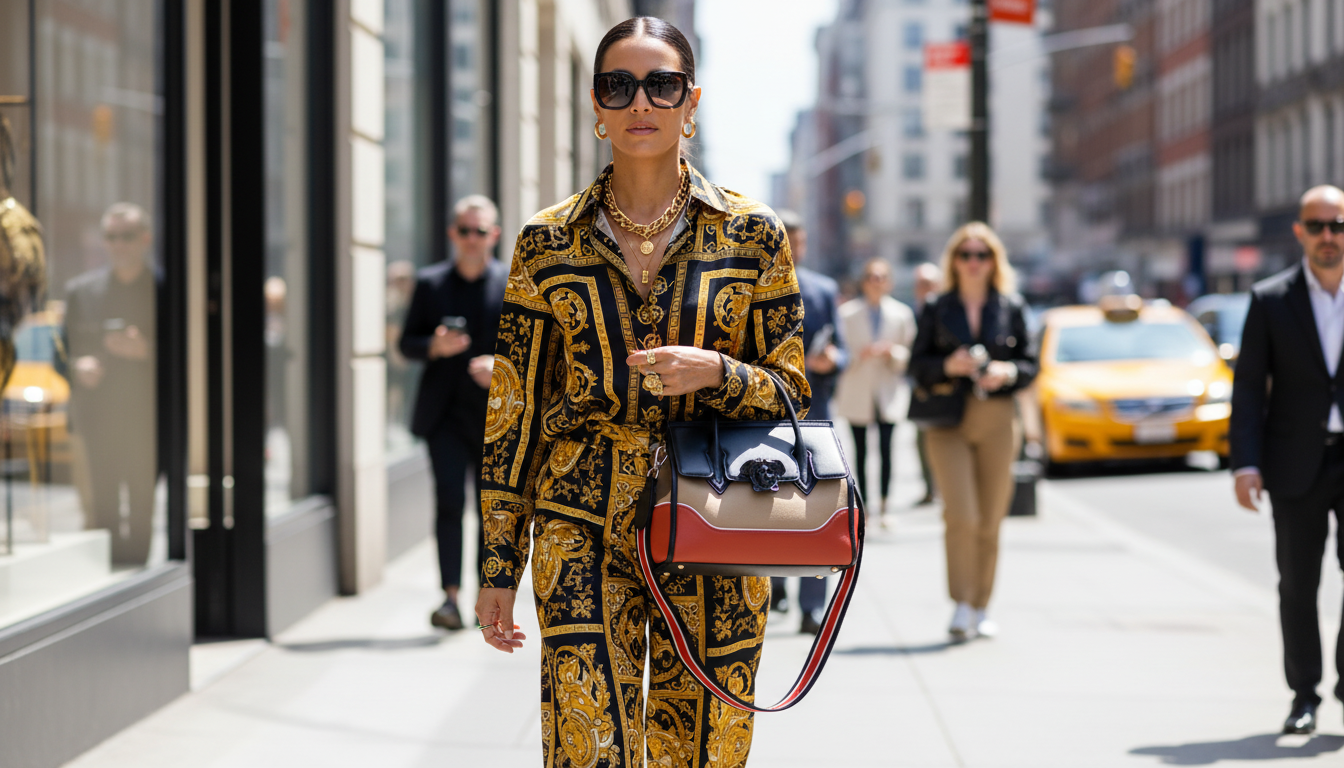
Versace has long operated at the intersection of glamour, provocation, and pop culture—turning runway moments into widely copied style cues. From signature prints to high-voltage tailoring and celebrity-fueled visibility, the house repeatedly sets the pace for what feels bold, modern, and desirable in luxury fashion. When Versace leans into a motif, a silhouette, or a color story, the impact rarely stays confined to luxury clients; it quickly echoes through stylists, street style, and mainstream retail. For more guidance, see How Versace Revolutionized the Fashion Industry – Rouge Magazine.
Versace’s influence starts with clarity. The brand doesn’t whisper; it communicates in big, legible signals that read from a distance—exactly the kind of visual language that becomes trend material. For further reading, see Versace: The History of a Powerful Brand – Fashinnovation.
| House element | How it shows up | Trend ripple effect |
|---|---|---|
| Baroque/chain prints | All-over patterns on dresses, shirts, accessories | Revives maximalist print-mixing and logo-forward dressing |
| Medusa & Greek key | Hardware, belts, bags, trims, jewelry | Boosts demand for bold insignia and heritage symbols |
| Power tailoring | Structured jackets, sharp suiting, strong shoulders | Re-centers statement tailoring in both menswear and womenswear |
| Metallics & shine | Lame, sequins, high-gloss finishes | Pushes partywear and evening glamour into everyday styling |
| Sensual cuts | Slits, cutouts, fitted knitwear, sculpted gowns | Normalizes confident body-led silhouettes across price tiers |
Versace runway shows are built like headline events: a strong theme, a punchy palette, and styling that’s meant to be photographed. This matters because today’s trend cycle runs on immediate recognition. A Versace look often has one dominant idea—“gold hardware,” “high-shine black,” “graphic print suit”—and that single idea becomes the takeaway replicated elsewhere.
For runway references and historical season context, fashion-show archives like Vogue Runway provide an accessible map of how these visuals evolve year to year.
Celebrity dressing is where Versace trends gain repetition—the crucial ingredient that turns a “moment” into a movement. When similar cutouts, corsetry lines, or sharp suiting keep appearing across award shows and tours, the silhouette becomes familiar to the wider market.
Versace’s trend impact is especially visible across decades because the brand keeps returning to a few durable themes—confidence, body-led glamour, and graphic power—while updating the styling for the moment.
For a broader view of fashion history and the way designers’ signatures become cultural artifacts, institutions like The Met’s Costume Institute offer helpful context on why certain aesthetics endure.
Versace relies on instantly recognizable house codes—Medusa and Greek key motifs, bold prints, and confident tailoring—then amplifies them through runway spectacle and high-visibility celebrity wear. Because the silhouettes and details are so clear, they’re easy for other brands and stylists to echo at multiple price levels.
Focus on one statement element at a time—bold print, gold-toned hardware, or a sharp blazer—then pair it with clean basics like black trousers, a simple dress, or a crisp white shirt. Accessories can carry most of the impact, especially when the rest of the outfit stays streamlined.
It can work with minimalist styling by anchoring a standout piece with neutrals, limiting accessories, and keeping lines clean. A single Versace-coded detail—like hardware, a graphic print panel, or a saturated color—can feel sharp and modern without becoming head-to-toe maximalist.








Leave a comment