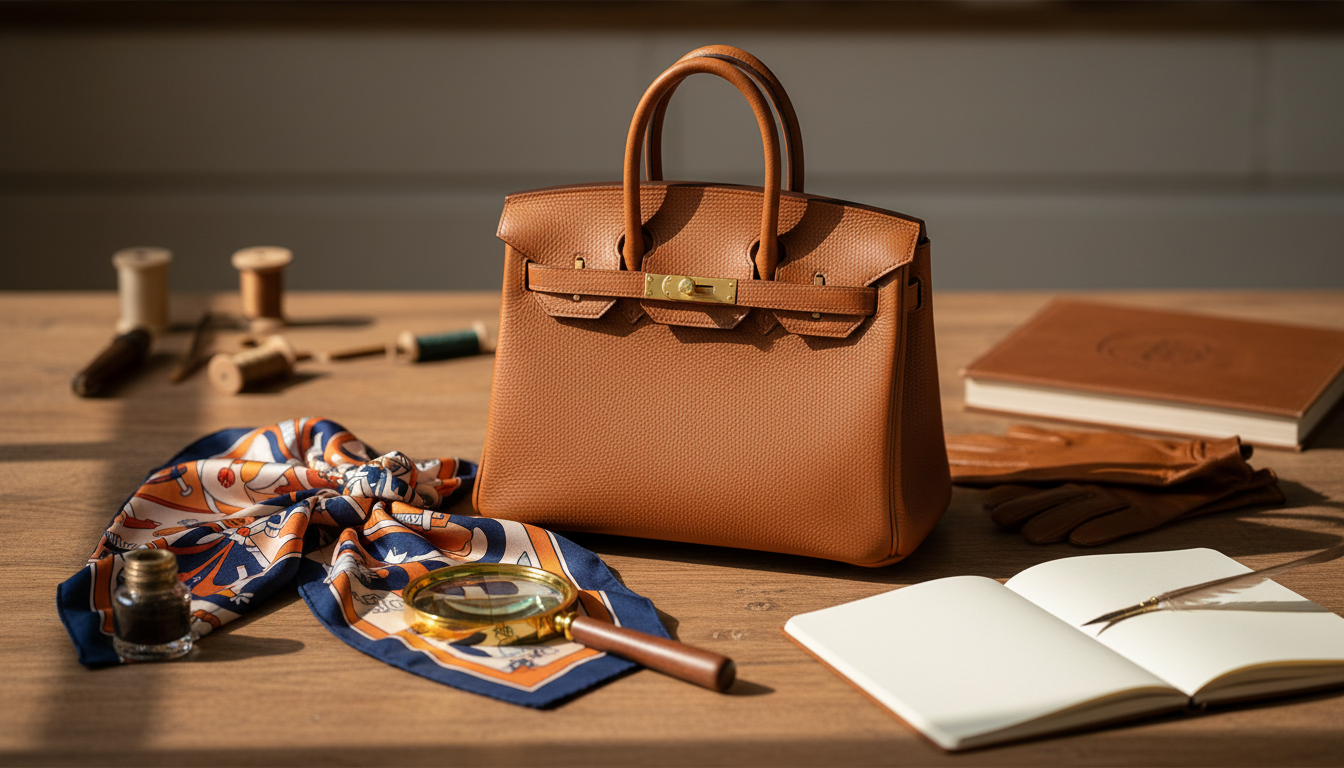
Hermès occupies a rare position where heritage craftsmanship, disciplined distribution, and cultural symbolism reinforce one another. Its reputation has been built through meticulous making, long-term consistency, and a business model that favors timeless desirability over rapid expansion—creating a brand that remains influential across fashion, luxury markets, and collector communities. For more guidance, see (PDF) Analysis of the Exclusivity of Hermès Handbags – ResearchGate.
Hermès began in 19th-century Paris as a harness and saddlery house, where functional excellence wasn’t a marketing story—it was the product. That origin matters because it set a non-negotiable baseline: materials must perform, construction must last, and finishing must be precise. For further reading, see Case Study | Inside Hermès’ Best-in-Class Leather Goods Strategy.
Over time, the house expanded into leather goods, silk, ready-to-wear, jewelry, watches, and home. Yet the brand’s core codes stayed intact: equestrian references, refined color, and an understated approach to status signaling. Instead of chasing novelty, Hermès tends to refine what already works—small shifts in proportion, hardware, color nuance, and material development that keep designs current without breaking continuity.
Another stabilizing force is governance. Hermès is known for long-horizon decision-making, which supports consistency in product strategy and brand posture even as the luxury market accelerates. More context on its reputation and long-term influence is available in Why Hermès Holds Legendary Status – A Deep Dive Guide to Hermès Reputation in Fashion, Luxury Brand Power & Timeless Market Influence.
For Hermès, craftsmanship is not a “premium detail” added at the end—it functions like an operating system. Small-scale production methods, specialized workshops, and apprenticeship-style training protect consistency. The pace is shaped by what skilled hands can reliably produce, not by what demand spikes suggest.
Hand-finishing, careful leather selection, and intensive quality control reduce volume, but they increase trust. Buyers tend to associate Hermès pieces with longevity: stitching that stays tight, edges that are neatly finished, hardware that feels substantial, and leather that wears in rather than wearing out.
Aftercare is part of that promise. Repairs and maintenance extend product life and reinforce the idea that ownership can span decades. This is also where “quiet confidence” becomes a design strategy: many pieces are recognizable to insiders through proportion, craftsmanship, and signature materials rather than loud branding.
For brand background and official product categories, visit Hermès — Official Website.
Hermès is often described as scarce, but the more useful question is how scarcity is created and sustained. Disciplined distribution—limited availability, tight control of channels, and minimal discounting—protects brand equity and pricing power. In a market where many labels rely on frequent releases and broad exposure, Hermès benefits from saying “no” more often than “yes.”
The boutique experience and relationship-driven purchasing shape perception. When access is curated, customers don’t just buy an item; they feel they’ve earned an entry point. Allocation practices—how inventory is offered, paced, and prioritized—create a strong retention loop: people stay engaged because availability is uncertain and the reward is meaningful.
Importantly, scarcity isn’t only marketing. Production constraints are tied to craft capacity: training, technique, and the time required to meet standards. That linkage makes the scarcity model more believable and harder to replicate at scale.
Some Hermès items are treated like durable goods with unusually stable demand. Icon products anchor the brand narrative and concentrate long-term interest, while consistency in materials and design language strengthens secondhand confidence. Buyers feel they can recognize what they’re buying—and that recognition supports liquidity in resale markets.
| Reputation driver | What it looks like in practice | Why it strengthens long-term influence |
|---|---|---|
| Craft capacity limits | Skilled labor, time-intensive construction | Keeps supply constrained and quality consistent |
| Design continuity | Season-to-season consistency with subtle evolution | Builds trust and reduces trend risk |
| Selective distribution | Few channels, minimal discounting | Protects pricing power and prestige |
| Aftercare and repair | Maintenance and restoration options | Reinforces longevity and resale confidence |
| Cultural symbolism | Association with taste, restraint, and heritage | Sustains desirability beyond fashion cycles |
For broader context on the luxury market forces that shape brand behavior—consumer demand, global growth, and category shifts—see Bain & Company — Luxury Goods Market Insights and ongoing coverage at Vogue.
For a deeper, organized read that connects reputation to market influence, see the full deep-dive guide. If you’re reading and researching on the go, a stable setup can help—this Adjustable Foldable Phone Stand for iPhone is a simple desk companion for comparing listings, condition photos, and authentication notes.
Hermès pairs craft-limited production with selective distribution and minimal discounting, which keeps supply tight and pricing consistent. Access is often curated through boutiques and relationships, reinforcing exclusivity over time rather than relying on short-term hype.
Some models can retain value well, especially in sought-after sizes, leathers, and colors, but outcomes vary by condition, authenticity, and market demand. Resale strength is influenced by limited supply and strong buyer confidence, yet it is never guaranteed.
Start with provenance and buy from reputable sellers that support third-party authentication. Inspect materials, stitching, hardware details, and construction consistency, and treat missing documentation or vague sourcing as a reason to slow down and verify.











Leave a comment