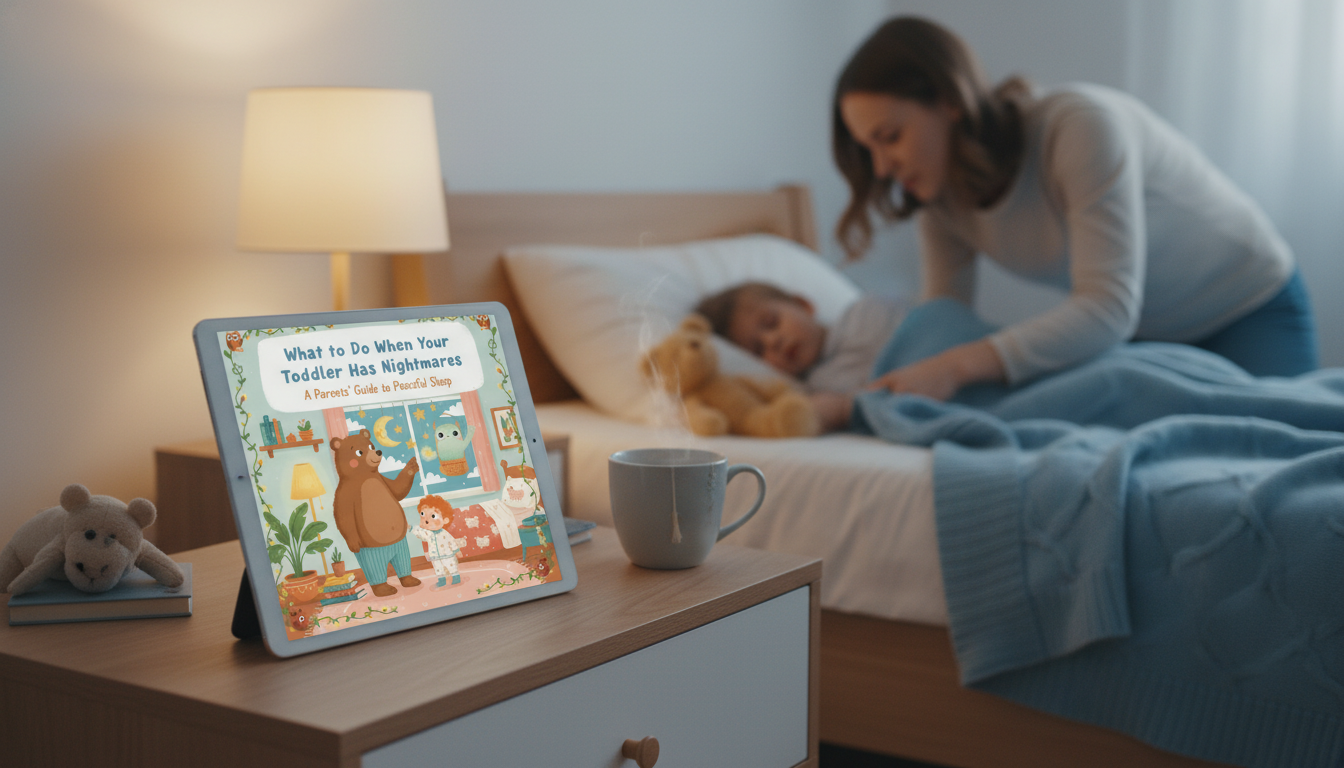
Toddler nightmares can show up suddenly—especially as imagination and language take off. Many kids have a noticeable increase between ages 2–6, when their brains are practicing memory, storytelling, and “what if” thinking (even at night).
Typical nightmares look like this: your child wakes fully, calls for you, wants to be held, and may share a few simple details (“spider,” “big dog,” “scary”). Because they’re truly awake, they often resist going back to sleep and may start worrying about the room, the closet, or being alone.
Common triggers include overtiredness, routine changes (travel, new bedtime, dropping a nap), illness, a new childcare situation, family stress, scary or fast-paced media, and big developmental leaps (new fears, new skills, separation anxiety returning).
What “normal” often looks like is an occasional nightmare that settles with soothing and doesn’t spill into the day. It may be more than occasional if nightmares happen most nights, bedtime anxiety becomes intense, daytime fears persist, or sleep turns into a nightly battle for everyone.
Nightmares and night terrors can both involve crying and fear, but they’re handled differently. Nightmares respond to comfort and reassurance; night terrors are more about keeping your child safe while the episode passes.
| Clue | Nightmares | Night Terrors |
|---|---|---|
| When it happens | Later in the night | Early in the night (first 1–3 hours) |
| Awake/aware | Wakes fully and seeks you | Looks awake but is disoriented or inconsolable |
| Memory of event | May recall scary dream | Usually no memory next day |
| Best response | Comfort, reassure, resettle | Keep safe, keep calm, wait it out |
| How long it lasts | Often minutes to 30+ minutes if anxious | Often 5–15 minutes |
If you’re unsure which it is, note the time of night, how alert your child seems, and whether they can be consoled. If episodes are frequent or feel dangerous, share those details with a pediatric clinician. For additional background reading, see guidance from American Academy of Pediatrics (HealthyChildren.org), the Sleep Foundation, and the NHS.
The goal at 2:00 a.m. isn’t to process the dream—it’s to help your toddler feel safe, calm their body, and return to sleep with as little excitement as possible.
Go to your child promptly. Turn on a dim light (not a bright overhead), and do a quick safety scan—especially if your toddler is standing, trying to climb out, or reaching for furniture.
Keep your voice low and predictable. Many toddlers settle faster with the same brief script each time: “You’re safe. I’m here. That was a scary dream.” Repetition is reassuring.
Offer a hug, slow back rubs, or “hand-on-chest breathing.” You can model 3–5 slow breaths and invite them to match you. If they can’t copy breathing, keep your own breathing slow while you hold them—your calm sets the pace.
It’s tempting to ask for details, but questions can accidentally fuel the scary story. If they share a fragment, accept it and pivot back to safety: “That sounds scary. You’re safe in your bed.”
Simple reality reminders help toddlers re-orient: “You’re in your room. The lights are dim. Your blanket is right here.” You can gently name familiar objects (stuffed animal, nightlight, door) to bring their brain out of “dream mode.”
Keep it consistent: a quick bathroom trip or sip of water if needed, a short cuddle, then back into bed. If they refuse to lie down, try a timed check-in: “I’ll sit here for two minutes, then I’ll move to the door.” This reduces long negotiations while still offering closeness.
Avoid bright lights, long discussions, screens, or turning the wake-up into playtime. The more “interesting” the moment becomes, the more your toddler’s brain learns to fully wake up after fear.
Nightmares often improve when the day-to-night transition feels predictable and the body isn’t pushed into overtiredness.
A single nightmare may be over quickly, but the settling period can take minutes to longer depending on how anxious or overtired your toddler is. With consistent responses and a predictable bedtime routine, many families see improvement over a few weeks, especially outside common developmental peaks.
Occasional exceptions are okay if everyone needs rest, but frequent bed-sharing after nightmares can become a new sleep association that’s hard to undo. Many families do better with a short cuddle and return to bed, a brief parent sit-nearby plan, or a temporary floor mattress with clear limits.
Use a short, repeatable script: “You’re safe. I’m here. That was a scary dream.” Then guide a few calm breaths and gently remind them of what’s real (“You’re in your bed; your blanket is right here”) before resettling.












Leave a comment