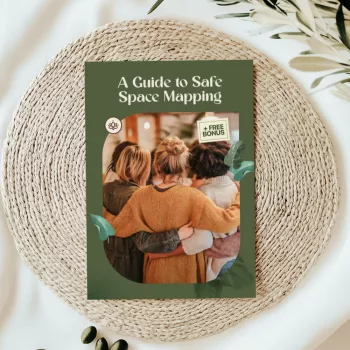
Safe space mapping is a practical method for identifying the specific conditions that help a person feel steady—then organizing those conditions into a repeatable plan for real life. Instead of treating “a safe space” as a vague idea, mapping breaks it down into concrete elements you can adjust: environments, sensory cues, boundaries, routines, and support people. The goal isn’t to avoid every hard feeling; it’s to reduce unnecessary threat, increase predictability, and make it easier to regulate, communicate, and participate.
Safe spaces can be physical (a room), social (a trusted group), digital (a moderated community), or internal (a grounding routine). They can also be temporary (a five-minute reset) or ongoing (a weekly group), depending on what you need that day.
A safe space is a context designed to lower avoidable stressors and increase choice, respect, and clear expectations. It supports nervous system regulation and helps people stay engaged—especially during conflict, sensory overload, or uncertainty. A safe space is not a promise of perfect comfort, agreement, or immunity from accountability. It should still allow honest feedback and repair when harm happens.
Safety is both objective and subjective. Objective safety includes things like secure locations, clear policies, or reliable moderation tools. Subjective safety depends on lived experience, personal triggers, access needs, and whether someone has real agency in the space.
| Type | Examples | Key ingredients | Common risks to address |
|---|---|---|---|
| Physical | Bedroom corner, quiet room, library nook | Control over noise/light, comfort objects, easy exit | Privacy breaches, overstimulation, lack of accessibility |
| Social | Support group, trusted friend circle, affinity group | Shared norms, confidentiality agreements, respectful facilitation | Gossip, boundary crossing, exclusion dynamics |
| Digital | Moderated forum, private chat, online peer group | Clear rules, reporting tools, consent-based sharing | Doxxing, harassment, screenshots, misinformation |
| Internal | Breathing routine, visualization, grounding practice | Repeatable steps, sensory anchors, self-compassion | Over-reliance when external help is needed |
Mapping turns “I don’t feel safe” into actionable details: “Bright overhead lights and unpredictable interruptions spike my stress; dim lighting and a clear exit route help.” That specificity makes it easier to test solutions, repeat what works, and notice patterns.
A map also supports proactive planning: picking seats, building breaks into your schedule, preparing short boundary scripts, and identifying quick-reset options when you can’t fully leave. During stress, it reduces decision fatigue by giving you a small menu of pre-decided steps instead of forcing you to invent a plan while overwhelmed.
Many people use safe space mapping in trauma-informed routines and sensory planning. For background on trauma and supportive environments, the American Psychological Association and SAMHSA’s trauma-informed care resources provide helpful context.
Choose one purpose at a time: calming down, focusing, social participation, conflict recovery, or sleep. Each purpose may require a different setup (for example, “focus” often needs fewer comfort items than “calm down”).
List early warning signs (tight chest, irritability, shutdown, racing thoughts) and what intensifies them (noise, crowding, uncertainty, certain topics). The earlier you notice these cues, the easier it is to intervene.
Brainstorm what reliably helps: specific places, a person who steadies you, comfort objects, movement, temperature changes, playlists, or grounding techniques. Keep it concrete (what, where, how long).
Write what is and isn’t okay (touch, jokes, raised voices, debate topics) and how you’ll say it simply. “No surprises” is a boundary; “text before calling” is a boundary; “no teasing about my appearance” is a boundary.
Include friction points that can break your plan: transportation, cost, hours, who has keys, childcare needs, device battery, Wi‑Fi, accessibility, and backups if your first option isn’t available.
Create a short sequence you can follow when stress hits: when I notice X, then I do A → B → C. Keep it printable and phone-friendly so you can use it fast.
Home: pick one reliable reset spot and reduce friction. A throw blanket, a charger, water, and a small comfort item can make a reset more automatic. If you live with others, make the “exit path” easy: a place to go without explaining yourself mid-overwhelm.
Safe space mapping is a method for identifying supportive places, people, and practices, documenting what helps or harms, and turning that information into a repeatable plan for regulation, boundaries, and access.
They work best when needs are described concretely—like requesting a quiet break, predictable communication, or a seating choice—using simple scripts and existing policies or accommodations rather than personal disclosure.
Yes, especially with strong moderation and privacy practices, but risks like screenshots, doxxing, and harassment mean boundaries and consent-based sharing are essential.











Leave a comment