Breathe, Stretch, Heal: A Gentle Postnatal Yoga Routine for Pelvic Floor Recovery
A calm, practical postnatal plan can support rebuilding strength, restoring breath, and easing back into movement—without rushing healing. This guide organizes gentle yoga, pelvic floor-friendly cues, and a simple checklist to help make recovery feel more manageable day to day.
What Postnatal Recovery Really Needs (Breath, Alignment, Consistency)
Early postpartum recovery responds best to small, steady inputs rather than big pushes. Think “nervous system first,” then gradually layer in mobility and strength as your body feels ready.
- Start with the nervous system: slower breathing can reduce tension that often shows up as neck, jaw, and pelvic gripping. When the breath softens, the pelvic floor often follows.
- Prioritize alignment over intensity: keep the rib cage stacked over the pelvis, soften the knees, and let the glutes relax. This reduces compensation that can make the pelvic floor feel “worked” without real support.
- Use a “less is more” rule: short sessions done consistently often support healing better than occasional long workouts—especially with sleep disruption.
- Respect healing timelines and birth variables: vaginal birth, tearing, C-section recovery, and diastasis recti can change what “gentle” should look like.
For general postpartum exercise guidance, see ACOG’s Exercise After Pregnancy and the Office on Women’s Health overview of your body after baby.
Safety First: When to Pause and Get Medical Guidance
Gentle movement should feel supportive—not like you’re pushing through warning signs. If something feels “off,” it’s okay to stop immediately.
- Stop and seek care for heavy bleeding, dizziness, fever, chest pain, calf swelling, or worsening pelvic/abdominal pain.
- Check with a clinician before resuming exercise if there were complications (severe tearing, prolapse symptoms, C-section concerns).
- Pelvic floor therapy can be helpful for leaking, heaviness/pressure, painful intercourse, or persistent core weakness.
- Keep expectations flexible: sleep deprivation and feeding demands can change what’s realistic each week.
A Gentle Postnatal Yoga Flow (10–15 Minutes) With Pelvic Floor-Friendly Cues
This short flow is designed to be repeatable. If 10–15 minutes feels like too much, do two or three steps and call it a win.
- Grounding breath (1–2 minutes): inhale into side ribs and back body; exhale slowly, letting shoulders soften. Let the belly be soft.
- Supported posture reset: seated or standing “stack” (ears over shoulders, ribs over pelvis), avoiding rib flare. Imagine your sternum melting down rather than lifting up.
- Cat-cow variation: keep the range small; focus on rib movement and gentle pelvic tilt without bearing down.
- Hip and glute release: reclined figure-4 (gentle), keeping breath easy and jaw relaxed. If you notice pelvic gripping, back off the stretch.
- Bridge prep (optional): exhale-first, lift only as high as neutral spine allows; stop if pressure/heaviness appears.
- Side-lying or child’s pose modification: prioritize comfort; widen knees and support with pillows as needed (especially if knees or hips feel tender).
- Finish with 60 seconds of relaxed breathing: downshift, soften the belly, and notice if the pelvic floor can “let go.”
Quick Routine Guide (Use What Fits Today)
| Move |
Time |
Focus |
Modify If Needed |
| Grounding breath |
1–2 min |
Downshift stress response; rib expansion |
Hands on ribs; seated in bed |
| Posture reset |
1 min |
Stack ribs over pelvis; soften glutes |
Wall support; micro-bend knees |
| Cat-cow (small range) |
2 min |
Spinal mobility without strain |
Do on forearms; reduce motion |
| Hip opener (reclined figure-4) |
2–3 min |
Glute/hip relief; gentle stretch |
Use a strap; keep foot on floor |
| Bridge prep (optional) |
1–2 min |
Posterior chain activation with breath |
Skip if pressure/heaviness |
| Supported rest + breath |
2–3 min |
Recovery; release pelvic gripping |
Pillow under knees; side-lying |
Pelvic Floor + Core: Cues That Prevent “Bearing Down”
A common postpartum mistake is turning every effort into a downward push. These cues help keep pressure from dropping into the pelvic floor or straining the midline.
- Use an exhale-first effort: gently exhale during the hardest part of a movement (like lifting hips or returning from a fold) to reduce downward pressure.
- Aim for “lift and soften,” not hard squeezing: over-gripping can increase pelvic tension and make relaxation harder later.
- Coordinate ribs and pelvis: if ribs flare, pressure often shifts downward; keep the rib cage quiet and stacked.
- Watch for warning signs: heaviness, bulging at the vaginal opening, increased leaking, pain, or doming/coning at the abdomen.
- Choose supported positions: side-lying, hands-and-knees, and supported reclined poses often feel best early on.
A Simple Postpartum Wellness Recovery Checklist (Daily and Weekly)
What’s Inside the Digital Guide and How to Use It
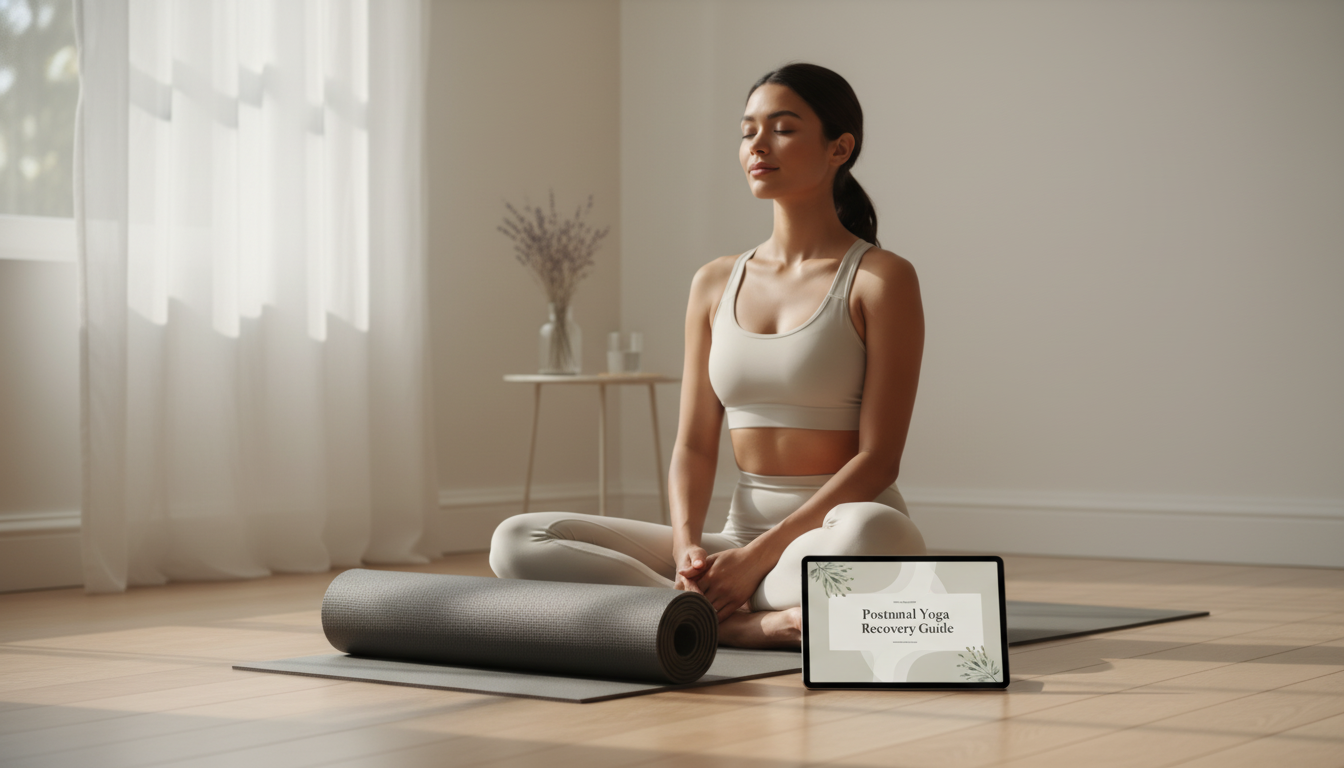
Recommended resource: Breathe, Stretch, Heal: Your Postnatal Yoga Recovery Guide (Digital Download).
Helpful for hands-free timers, calming music, or guided breathing while feeding: Universal Forklift Wireless Charger and Phone Holder for Cars (also useful for gentle walks when you want navigation without hunching over your phone).
Common Adjustments for Real Life (Feeding, Sleep, and Time)
If you’d like additional general guidance on postpartum activity pacing, the NHS exercise after pregnancy page offers a helpful overview.
FAQ
When can postpartum yoga begin?
Many people start with gentle breathing and very light mobility once their clinician says it’s safe, but the timing varies—especially after a C-section or complications. If anything increases pain, bleeding, or pressure/heaviness, pause and ask for guidance.
Is yoga safe with diastasis recti?
Yoga can be appropriate when you choose low-pressure movements, avoid aggressive crunching or straining, and watch for doming/coning along the midline. If symptoms persist, a pelvic floor physical therapist can help you progress safely.
How do you know if a pelvic floor exercise is too much?
Signs include heaviness, bulging, increased leaking, pain, or worsening pressure during or after movement. Scale back, return to exhale-first effort and supported positions, and seek professional evaluation if it doesn’t improve.
Recommended for you












Leave a comment