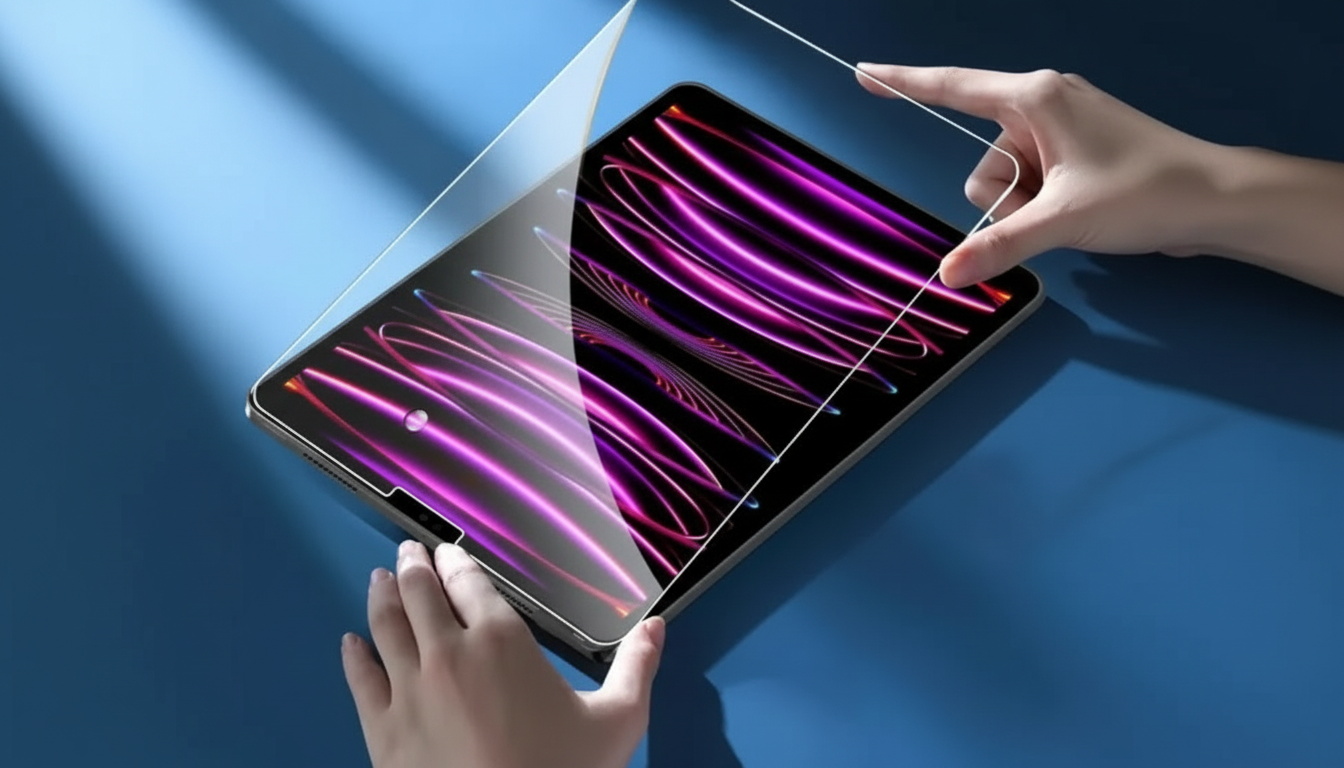
A good screen protector should disappear during everyday use while quietly handling scratches, smudges, and the occasional bump. This tempered glass option is made for popular iPad sizes and focuses on keeping the display crisp, touch response snappy, and maintenance simple—whether the iPad is used at home, in class, or on the go.
Tempered glass protectors are designed to take the routine abuse that would otherwise land on your iPad’s original display glass. Instead of treating protection like a “maybe,” they add a dependable top layer that you can replace later—without changing how the screen looks or feels day to day.
If you want a simple, budget-friendly way to keep the front glass looking “newer for longer,” consider the Premium Tempered Glass Screen Protector for Apple iPad 10.2/9.7/10.9 Inch.
Fit is what separates a protector that blends in from one that nags you with edge lift, weird alignment, or interference with a case. Because Apple’s naming can be confusing across generations, it’s smart to verify your model before ordering. Apple’s guide to identify your iPad model is the fastest way to confirm size and generation.
| iPad screen size | What to verify before applying | Notes for best fit |
|---|---|---|
| 9.7 inch | Model and generation; camera/sensor layout | Older models often have different bezel and camera alignment |
| 10.2 inch | Case lip clearance; alignment with display edges | Common for classroom and home use—take time to center it |
| 10.9 inch | Edge spacing and case compatibility | Slight misalignment is more noticeable due to larger screen area |
The best compliment a screen protector can get is that you forget it’s there. Clear tempered glass is built around that idea: keep the display looking like the original, keep touch gestures consistent, and keep the surface easy to wipe down.
For Apple Pencil users, the most noticeable “feel” changes usually come from tiny dust specks trapped during installation or a protector that isn’t fully bonded along an edge. A clean, centered application keeps writing and sketching consistent and reduces the chance of catching the tip on a raised corner.
If you’re curious about why glass behaves the way it does under stress, Corning’s overview of glass properties and innovation offers helpful background.
| Step | Goal | Tip |
|---|---|---|
| Clean | Remove oils and debris | Use short strokes; finish with a dry wipe |
| Align | Center the protector | Hover to confirm edges before lowering |
| Apply | Bond evenly | Press center first; let it spread outward |
| Finish | Remove minor bubbles | Use a card wrapped in a cloth to push gently |
If touch becomes inconsistent, it’s worth checking Apple’s steps for when the iPad screen isn’t working to rule out settings or software issues before assuming the protector is the cause.
To reduce the stress of losing track of your iPad bag or sleeve while traveling, pair your setup with a Silicone AirTag Holder for keeping track of an iPad bag or case. And if you use your iPad for navigation or media in the car (as a passenger or mounted for stationary use), a Universal Forklift Wireless Charger and Phone Holder for Cars can help keep devices powered and accessible.
Typically, quality glass protectors maintain normal touch response and Apple Pencil tracking. Installation quality matters most—dust, bubbles, or slight misalignment can create uneven contact that feels like reduced sensitivity.
Small air bubbles often push out with gentle pressure from the center toward the edge. If a bubble is anchored by a dust speck, slightly lift the nearest corner, remove the speck (a small piece of tape works well), and then reapply that corner.
Yes. Tight cases or raised lips that press on the protector can cause edge lift over time, especially when grit gets trapped along the rim. Checking case clearance and keeping the edges clean helps prevent lifting.








Leave a comment