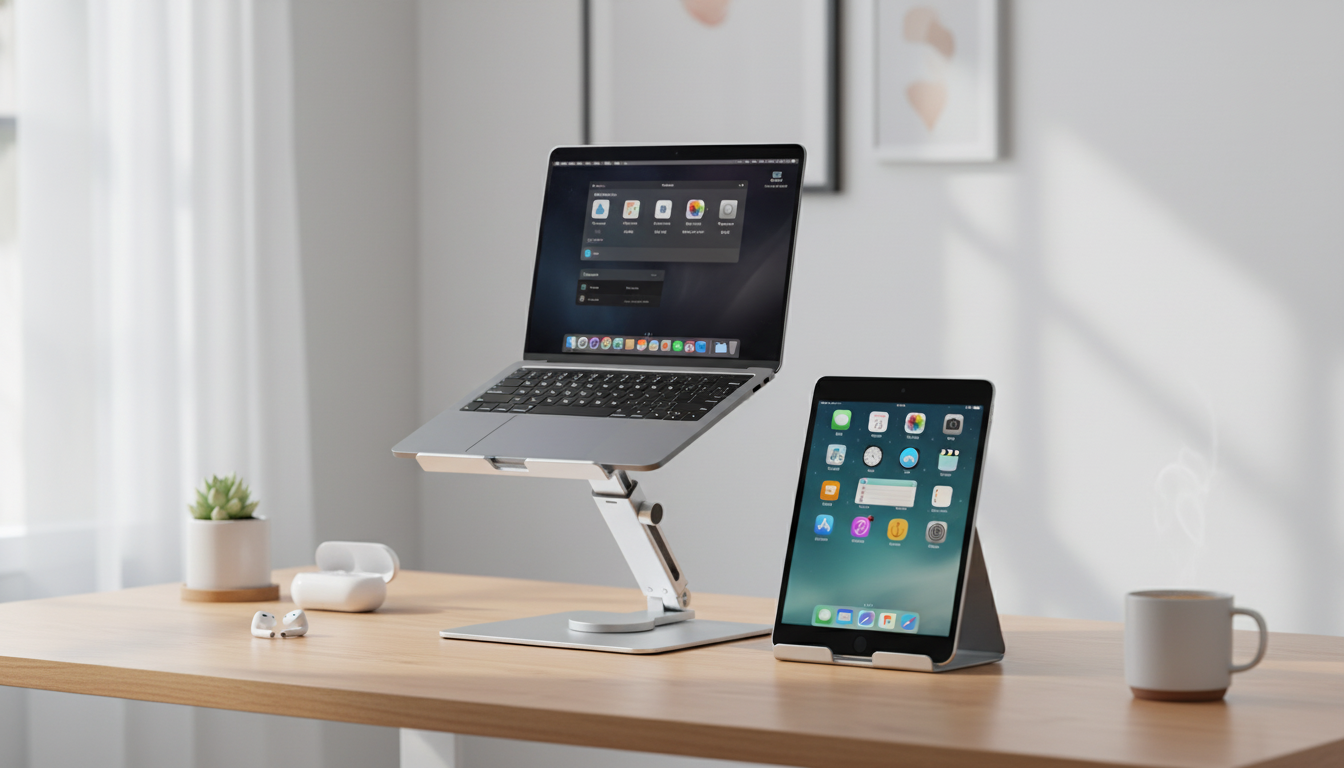
An aluminum stand can make an Apple setup feel instantly more organized—raising a MacBook or iPad to a more comfortable viewing height, improving airflow, and freeing up space for a keyboard, trackpad, or everyday accessories. When your devices have a consistent “home base” on the desk, it’s easier to sit down, plug in once, and get moving without constantly re-centering the screen or fighting cable clutter.
The right stand doesn’t need to be complicated. It just needs to be stable, protective of Apple’s aluminum finishes, and shaped in a way that keeps ports usable. Below are practical ways a stand helps day to day, how to confirm fit with common Apple setups, and simple comfort tweaks that don’t turn the desk into a project.
Ergonomic guidance commonly emphasizes keeping screens at a comfortable height and keeping wrists and shoulders relaxed during input. For general workstation positioning, OSHA’s computer workstation resources are a helpful reference for practical posture basics.
Most aluminum laptop/tablet stands are designed around a simple idea: support the device at two points, add a secure lip, and use padding to prevent scratches. That works well across Apple’s lineup, as long as the stand leaves room for USB-C cables and doesn’t pinch the chassis.
| Device setup | What the stand should provide | Helpful add-ons |
|---|---|---|
| MacBook as main screen | Stable base, comfortable viewing height, good airflow | External keyboard and trackpad/mouse |
| MacBook + external monitor | Solid support and cable clearance | USB-C hub, cable clips or sleeve |
| iPad for writing/drawing | Non-slip contact points and firm angle | Stylus, matte screen protector (optional) |
| iPad for video/reading | Steady lip support and a comfortable tilt | Bluetooth keyboard (optional) |
Apple devices are sleek, rigid, and often used on smooth desks—so the stand’s “small” details are what determine whether it feels rock-solid or slightly fussy. Focus on the factors below before worrying about aesthetics.
For long work sessions, posture and comfort matter as much as the stand’s build. NIOSH offers general background on ergonomics and musculoskeletal health that aligns well with keeping a neutral, relaxed setup.
External references:
OSHA Computer Workstations eTool,
NIOSH Ergonomics and Musculoskeletal Disorders,
Apple Support
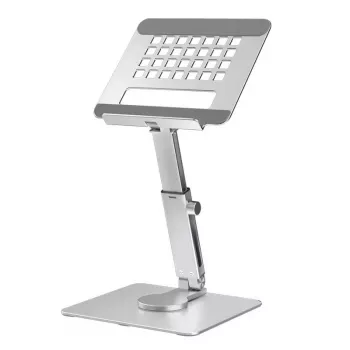
If the goal is a cleaner desk with less device shuffling, a dedicated stand is the anchor piece. The Aluminum Tablet and Laptop Stand for Apple Devices is a straightforward choice for elevating a MacBook or stabilizing an iPad for daily desk use—especially when paired with an external keyboard and a simple cable route.
| Accessory | Where it helps | Good for |
|---|---|---|
| Creative Transparent All-Inclusive Drop Protection Case for iPhone 16, 15, 14, 13, 12 | Everyday carry protection | Commuters and students |
| Universal Forklift Wireless Charger and Phone Holder for Cars | Stable phone positioning and charging in the car | Drivers who use navigation and calls |
| Silicone AirTag Holder | Keeps tracking simple for bags/keys | Travel and busy households |
Yes for desk use as long as the stand is stable, doesn’t block ventilation, and the MacBook sits securely on padded contact points. For long typing sessions, pair it with an external keyboard and trackpad/mouse.
It shouldn’t if the stand has intact rubber/silicone pads and the surfaces are kept clean. Dust trapped between the device and pads is a common cause of scuffs—wipe both regularly.
Use a stable tilt that keeps the wrist neutral and the device firmly seated. If the angle is steep, rest your forearm on the desk and consider adjusting chair height so shoulders stay relaxed.












Leave a comment