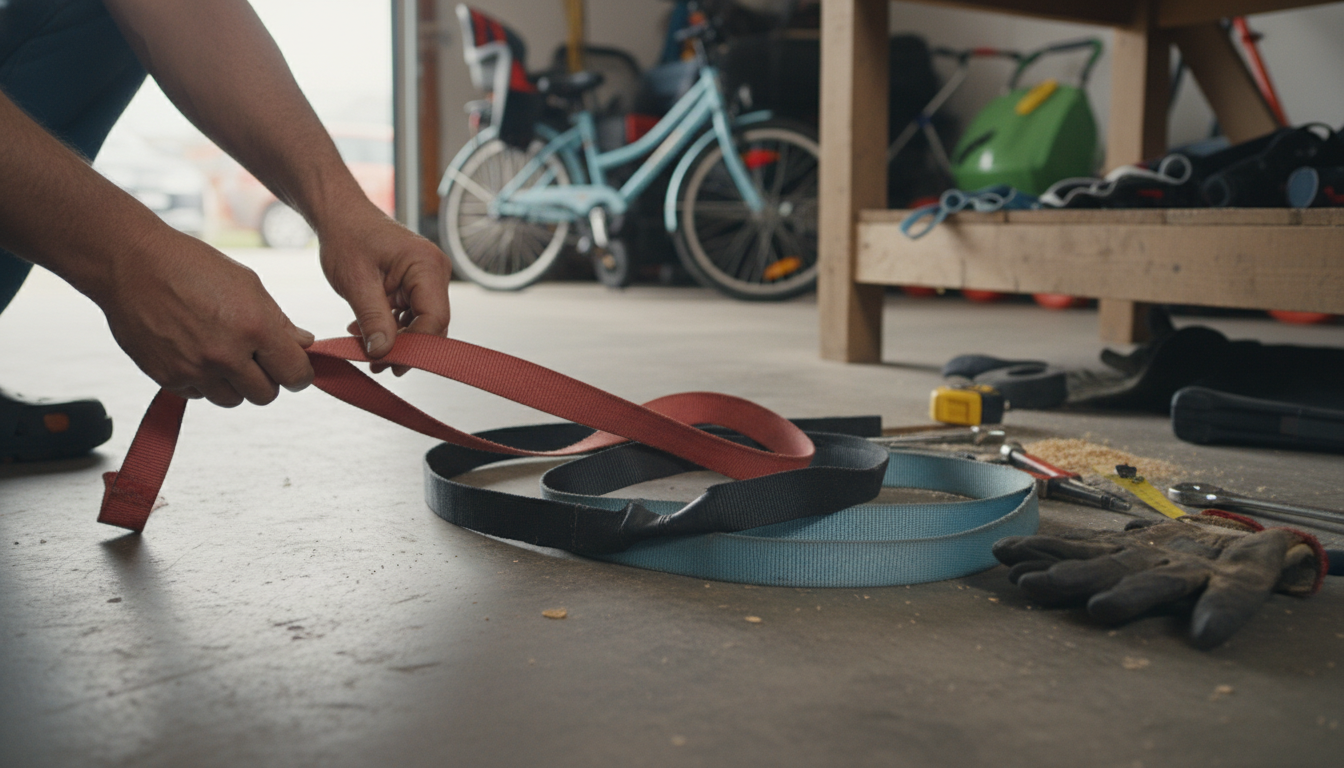
Nylon straps are popular because they’re lightweight, affordable, and easy to find, but they aren’t perfect for every job. The main drawbacks come down to performance under heat and UV exposure, stretch, comfort, and long-term wear—especially when straps are used outdoors, under heavy loads, or against sensitive surfaces.
Nylon has more “give” than many other strap materials. Under sustained tension, it may elongate, which can loosen a tie-down over time. For loads that must stay rigidly secured—like cargo on a rack or equipment during transport—this stretch can require frequent re-tightening.
Nylon absorbs water more than some synthetic alternatives. When wet, it can lose a noticeable amount of strength and feel softer. In rainy, marine, or high-humidity conditions, that can affect reliability and make consistent tension harder to maintain.
Extended sun exposure can degrade nylon fibers, leading to fading, stiffness, or weakened webbing. Heat is another concern: nylon can soften and deform at lower temperatures than materials designed for high-heat environments, increasing the risk of damage when used near engines, hot exhaust, or friction-heavy applications.
Nylon webbing can fray when dragged over rough surfaces or pulled across sharp edges. Even small cuts or worn spots can significantly reduce working strength. Using edge protectors helps, but it’s an extra step many people skip.
On wearable items (like backpacks, pet gear, or camera straps), nylon can feel stiff, trap heat, and cause rubbing. The texture and rigidity can become more noticeable during long wear, especially when sweat and movement increase friction.
For a deeper comparison of nylon strap trade-offs and practical alternatives, visit the main guide on nylon strap disadvantages.
Polyester is often preferred outdoors because it typically absorbs less water and holds up better under UV exposure. For high-abrasion or specialty uses, coated webbing or purpose-built high-strength fibers may be a better match.











Leave a comment