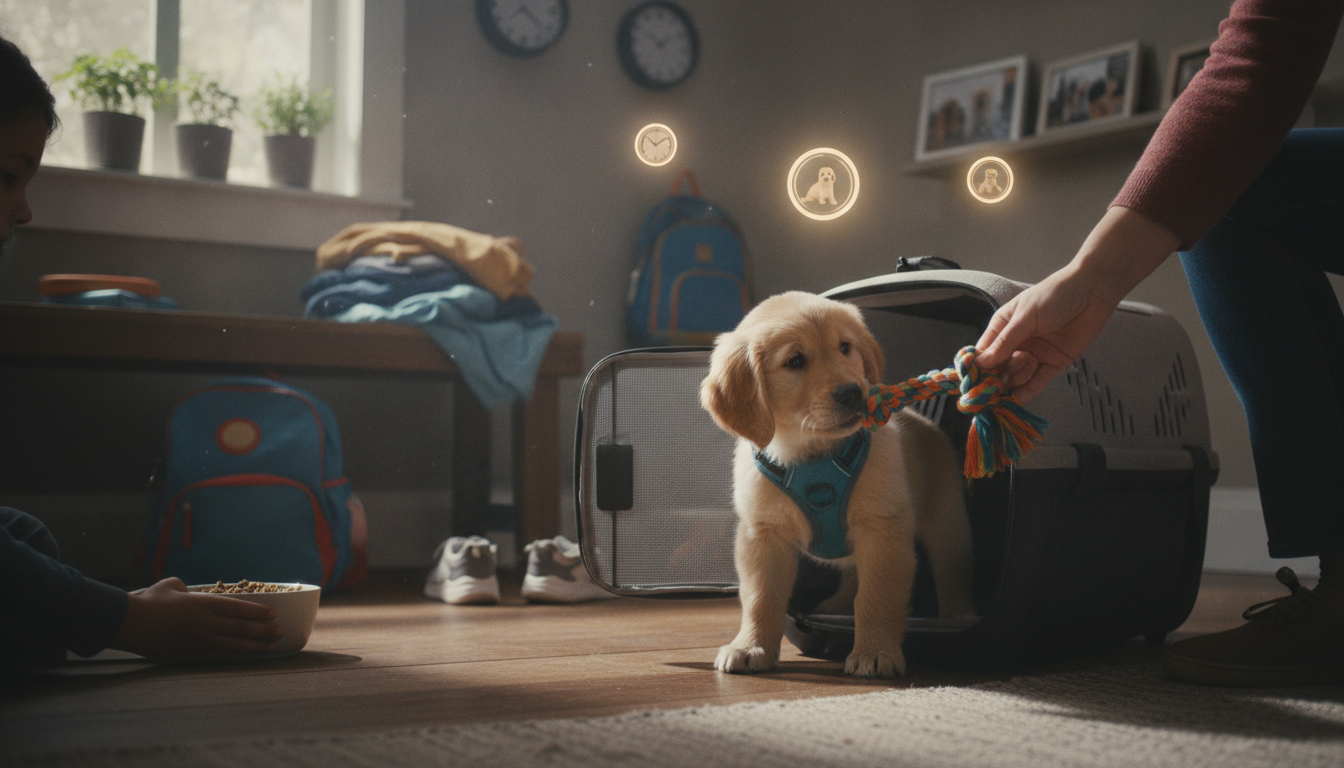
The 3-3-3 rule is a simple timeline that helps set realistic expectations as a puppy adjusts to a new home. It’s often used for newly adopted dogs, but it applies to puppies too: the first 3 days are about decompression, the first 3 weeks are about learning routines, and the first 3 months are about building confidence and reliable habits.
During the first few days, many puppies are overwhelmed. Focus on calm, predictable care: frequent potty breaks, gentle introductions to the home, and lots of quiet rest. Keep training “wins” easy—reward going potty outside, responding to their name, and choosing a toy instead of chewing hands. Avoid overcrowding their schedule with visitors, long outings, or too many new experiences at once.
Once your puppy feels safer, patterns become clearer: when they need to potty, what triggers nipping, and how they handle alone time. This is the best window to lock in a consistent schedule (wake-up potty, meals, play, naps) and start short, upbeat sessions for basics like “sit,” “come,” and “leave it.” Socialization should be controlled and positive—think brief exposures paired with treats, not forced interactions.
By about three months in, many puppies show their true personality and can handle more structure. Keep reinforcing house training, expand distractions gradually, and practice skills in new locations. This is also when boundaries matter: consistent rules about jumping, biting, and chewing prevent “cute now, hard later” habits. For a day-by-day approach to potty training, commands, and socialization, follow the 4-week puppy training plan.
Take them out after waking, after eating or drinking, after play, and at least every 1–2 hours at first. As accidents decrease and bladder control improves, you can slowly extend the time between breaks.













Leave a comment