
Great conversations rarely happen by accident. They come from the right mix of curiosity, timing, and questions that invite real stories. This guide helps move beyond small talk with practical, ready-to-use questions and follow-ups that fit first dates, new friendships, work events, and online chats—without making the moment feel scripted.
Meaning tends to come from three ingredients: attention (listening closely), vulnerability (sharing something real), and relevance (asking what fits the setting). When all three show up—even in small ways—people feel seen instead of “managed.”
A strong question is specific enough to spark a memory, but open enough to allow choice in how much to share. “What’s a book you loved?” invites a different level of story than “Do you like reading?”
Depth is a dial, not a switch. Start light, notice comfort cues (tone, eye contact, ease of answering), then gradually move to values, hopes, and experiences. “Meaningful” also doesn’t mean intense; playful curiosity and warmth can lead to genuine connection without turning the moment into a therapy session.
Pick one question that matches the moment, then add a short personal reason for asking. Something as simple as, “I’ve been thinking about this lately…” gives your question a natural landing.
Ask, then pause. People often need a beat to choose the story they want to tell. Avoid stacking multiple questions at once—one thoughtful question with one follow-up usually feels better than five scattered topics.
If someone seems shy, offer “either/or” options: “Are you more of a planner or a go-with-the-flow type?” Once they choose, invite the story behind it: “What made you that way?”
Follow the energy. If they light up, go deeper with a gentle follow-up. If they answer briefly, pivot to something lighter or more concrete (food, local spots, what they’re into lately). Before moving on, close the loop by reflecting what you heard: “That sounds like it meant a lot to you.”
For more science-backed communication ideas, resources from Greater Good Magazine (UC Berkeley) and Harvard Business Review are helpful for understanding why certain questions create better connection at work and in relationships.
| Setting | Starter question | Easy follow-up | What it reveals |
|---|---|---|---|
| First date | What’s a small thing that made you genuinely happy this week? | What made it stand out? | Attention to daily joy and mindset |
| New friend | What’s a tradition you grew up with that you still like? | Do you still do it now—why or why not? | Background, family culture, nostalgia |
| Networking event | What’s a project you’ve enjoyed recently? | What part of it felt most satisfying? | Strengths, motivation, interests |
| Team coffee chat | What’s something you’re learning right now—work-related or not? | How did you get into it? | Curiosity, growth habits |
| Online dating/chat | What’s a “perfect ordinary day” look like for you? | Which part is non-negotiable? | Lifestyle fit and values |
| Long-term partner | What’s a belief you’ve changed your mind about? | What helped you change it? | Openness, reflection, communication style |
For connection that feels safe and practical, ask about boundaries and needs: “What does feeling respected look like to you in everyday life?” Or try belonging questions: “When do you feel most like yourself?” and “What helps you get there?” For additional relationship communication guidance, the American Psychological Association has a solid overview of relationship and communication topics.
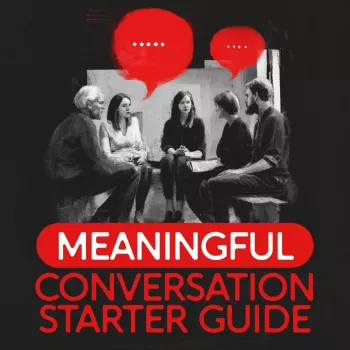
If you tend to freeze under pressure, having a small set of options makes it easier to stay present. The Meaningful Conversation Starter Guide (printable) is designed to be used before a date, on the way to a meetup, or right before a networking event—pick a few questions that match the vibe and let the moment do the rest.
For online chats and video calls, a simple setup can help you feel more relaxed while you focus on listening. Pair the guide with an Adjustable Foldable Phone Stand for iPhone to keep your screen at eye level, or use the Universal Forklift Wireless Charger and Phone Holder for Cars if you’re heading to a meetup and want directions plus charging in one place.
Select 5–10 options and expect to use only 2–4 in the moment. The goal is flexibility: one good question plus attentive follow-ups usually creates better conversation than trying to cover a long list.
Try a low-pressure follow-up (“What makes you say that?”), switch to an either/or question, or share a quick related detail about yourself and ask again. If it still stays flat, pivot to a more concrete topic like food, plans for the weekend, or current hobbies.
Increase depth gradually and give choice in how much to share (“light or deep is fine”). Ask about preferences and values rather than painful experiences, and watch for comfort cues—if they get quieter or vague, return to lighter ground.












Leave a comment