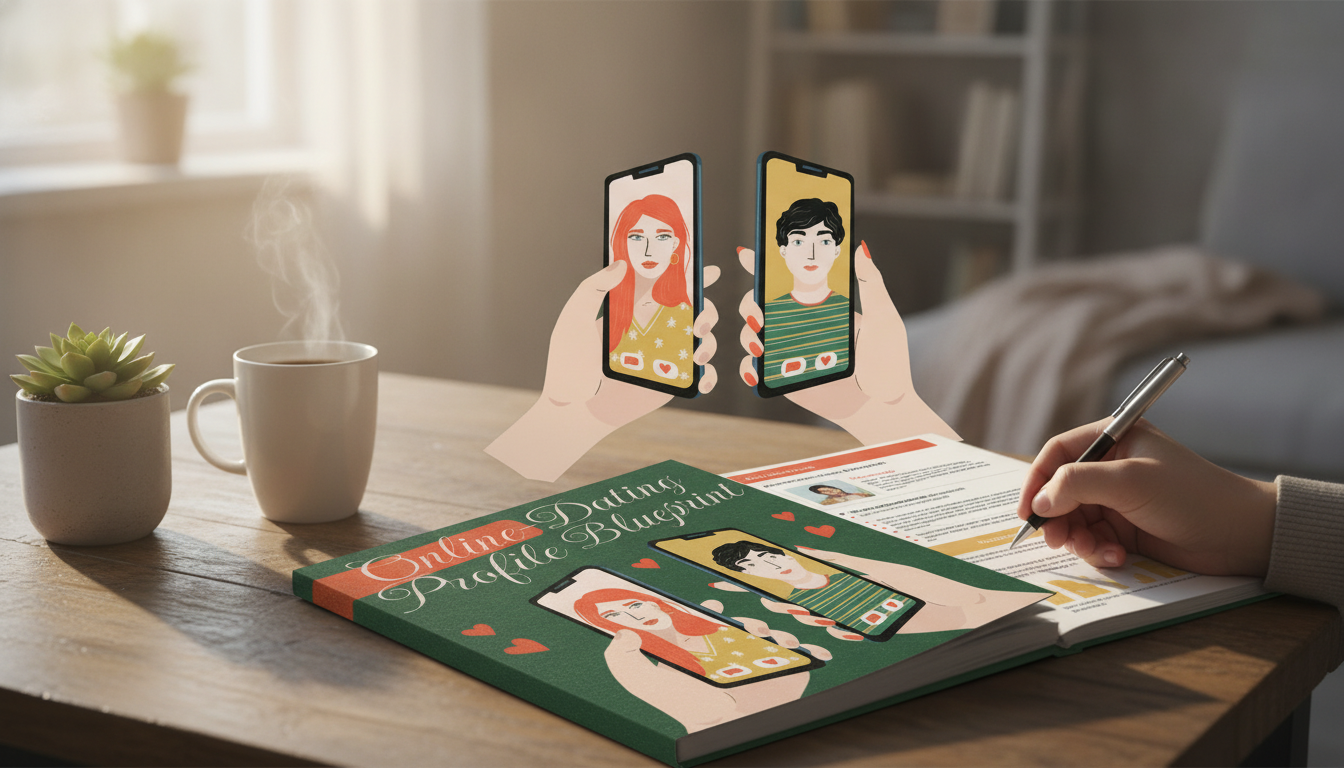
A clear, printable structure can remove the guesswork from online dating: what to say in a bio, which photos to use, and how to open conversations in a way that feels natural. A blueprint-style approach turns scattered ideas into a repeatable profile-and-message routine that attracts compatible matches without pretending to be someone else.
A blueprint doesn’t “hack” chemistry. What it does is make the basics easier to do well—consistently—so the right people can actually recognize you.
Before choosing photos or writing a bio, do a quick “self-scan” so your profile reflects real life—not an aspirational collage.
If you notice yourself spiraling into perfectionism, that’s normal. Stress can narrow focus and make simple decisions feel heavy; the American Psychological Association outlines how stress can affect the body and decision-making. A checklist helps because it lowers the mental load.
Your photos do most of the “explaining” before anyone reads a word. The goal is variety plus clarity—so someone can picture what time with you actually looks like.
| Photo type | What it signals | Simple tip |
|---|---|---|
| Clear face photo | Approachability and trust | Natural light, eyes visible, relaxed expression |
| Full-body photo | Transparency and confidence | Casual setting; avoid heavy distortion or old shots |
| Activity photo | Lifestyle and interests | Choose an activity you do regularly, not once-a-year |
| Social photo | Community and friendliness | Limit to one; make sure it’s obvious who you are |
| Conversation starter | Personality and curiosity | Include a small detail someone can ask about |
The strongest profiles feel readable. They make it easy for the right person to respond, because they contain real details—not just nice-sounding traits.
For perspective on how common online dating has become—and the tradeoffs people report—see Pew Research Center’s findings on online dating.
| Template | When to use | Example |
|---|---|---|
| Specific + question | They have a clear hobby/photo | “That hike looks unreal—was it [place]? Any other trails you’d recommend?” |
| Prompt callback | They answered a prompt with an opinion | “Strong take on pineapple pizza. What’s your ‘controversial’ food opinion?” |
| Two-choice question | Their profile is sparse | “Quick poll: coffee shop date or walk-and-talk date?” |
| Shared detail + curiosity | You share an interest | “You’re into museums too—what exhibit has stuck with you the most?” |
For practical safety guidance, RAINN’s online dating safety tips is a strong resource to review and share with friends.
If having a single, structured plan would make this feel easier, Online-Dating Profile Blueprint | Printable Guide to Authentic Dating Profiles, First Messages, and Better Matches is designed as a print-and-fill resource for profile writing, photo planning, and message starters. It works whether you’re rebuilding from scratch or refining what you already have—without losing personality.
Typically, 4–6 photos is a solid range. Prioritize variety (clear face, full-body, activity, and one social shot) and make sure each photo is recent and easy to understand at a glance.
Use a friendly two-choice question or a simple “What are you into lately?” opener that’s easy to answer. Keep it to one or two sentences so it feels low-pressure.
A light weekly tweak (one photo or one prompt) keeps your profile aligned with your current routine. At minimum, refresh monthly and replace any photos that no longer match what you look like day-to-day.









Leave a comment