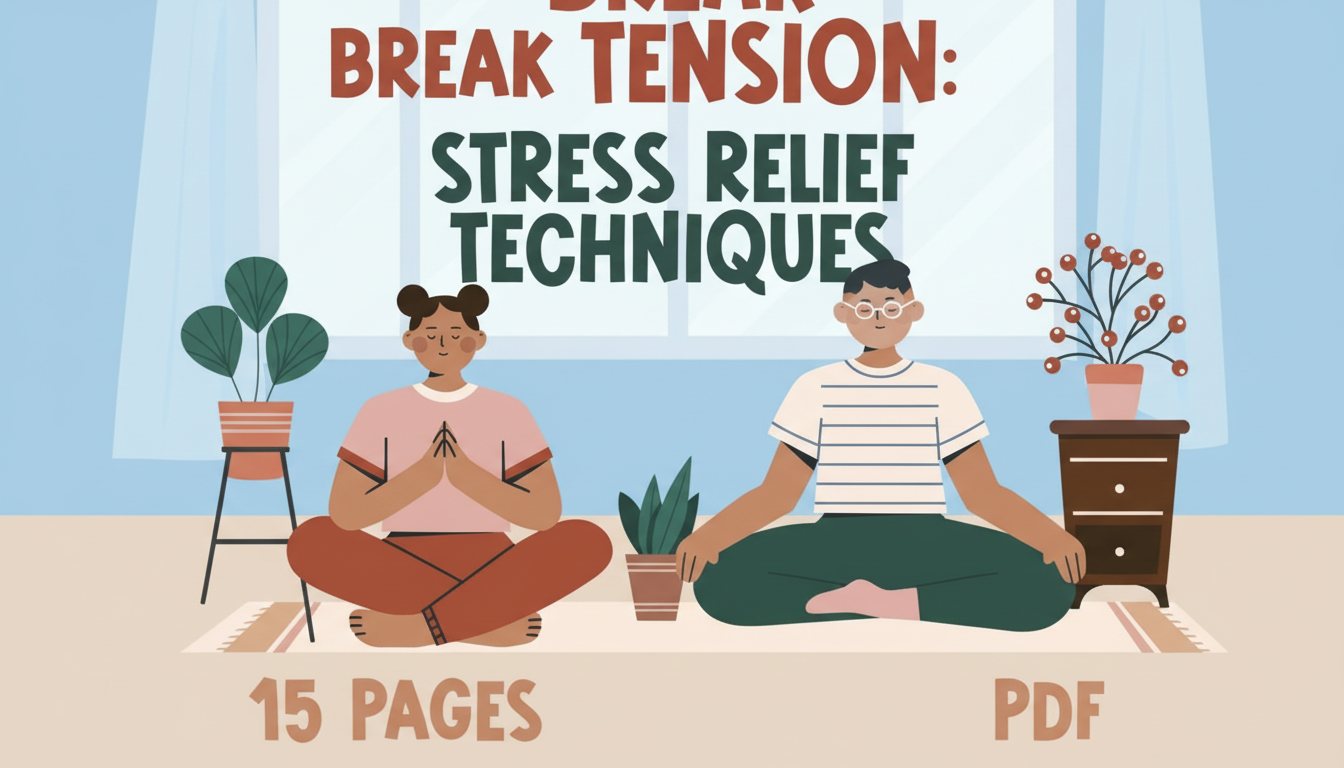
Stress can spike in minutes—during a meeting, in traffic, or while juggling deadlines—and the body often reacts before the mind catches up. The fastest relief usually comes from a small set of skills that lower physical arousal (breathing), steady attention (grounding), and reduce overwhelm (short meditations and practical planning). When those pieces work together, the nervous system gets the message that you’re safe, and your thinking gets clearer again.
Stress doesn’t always show up as “anxiety.” Often it arrives as physical tension first—then the thoughts start sprinting to keep up.
If stress feels frequent or intense, reputable overviews from the American Psychological Association and the Mayo Clinic can help you understand what’s happening and what tends to help.
Breathing is the fastest “remote control” for stress because it directly influences arousal. Aim for quiet, smooth breaths and relaxed shoulders.
| Technique | When to use it | How long | What to focus on |
|---|---|---|---|
| Physiological sigh | Sudden spike of anxiety or tension | 30–60 sec | Long, complete exhale |
| Box breathing | Before a stressful conversation or presentation | 2–4 min | Even counts and steady pace |
| Extended exhale | Restlessness, agitation, irritability | 1–3 min | Exhale longer than inhale |
| 5-4-3-2-1 grounding | Racing thoughts or feeling unreal/disconnected | 1–3 min | Sensory details in the room |
| One-minute reset | Too busy for anything longer | 60 sec | Exhale, unclench, soften gaze |
Meditation doesn’t need a perfect setting. The goal is to step out of the mental “spin cycle” long enough for the body to settle and for your next step to look obvious again.
If you want an evidence-informed overview of relaxation approaches, the National Center for Complementary and Integrative Health summarizes common techniques and how they’re typically used.
Grounding pulls attention out of “what if” and back into what’s verifiably here. That shift often reduces the sense of alarm within a minute or two.
Breathing helps you downshift, but planning prevents the next surge. The aim isn’t doing everything—it’s reducing ambiguity, decision fatigue, and task-start friction.
For stress that flares on the go, removing small daily friction points can help. A hands-free setup in the car can reduce fumbling and distraction during commutes—see the Universal Forklift Wireless Charger and Phone Holder for Cars. And if “please don’t drop my phone” is a constant background worry, a protective case like the Creative Transparent All-Inclusive Drop Protection Case for iPhone 16, 15, 14, 13, 12 can be one less thing to brace for.
For step-by-step prompts and structured practice, use Break the Tension: Stress Relief Techniques – Breathing Exercises, Quick Meditations, Grounding Techniques, and Time Management Tips to Reduce Stress.
The physiological sigh is one of the quickest ways to downshift: inhale through your nose, add a short second inhale, then exhale slowly through your mouth for 3–5 rounds. Use it when you feel a sudden spike of tension; if you get lightheaded, shorten the breaths and return to normal breathing for a few cycles.
Grounding shifts attention from alarming thoughts to neutral sensory facts, which can reduce rumination and help the body exit “alarm mode.” A fast example is 5-4-3-2-1: name what you see, feel, hear, smell, and taste in the room.
Time management lowers stress by reducing ambiguity and decision fatigue—your brain stops re-choosing what matters every minute. Limit “must do today” to three items, start with a 5-minute starter step to break inertia, and add short transition buffers so tasks don’t collide back-to-back.











Leave a comment