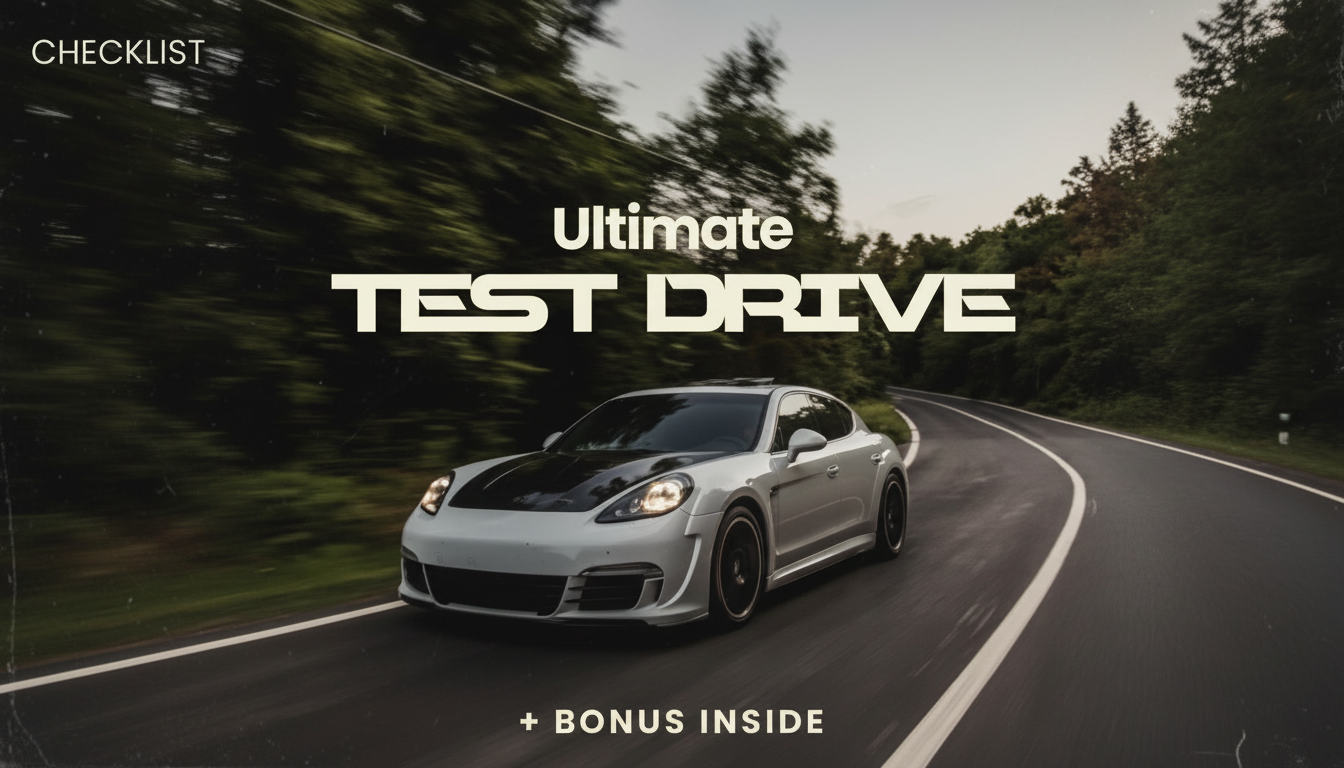
A test drive should reveal more than whether a car “feels good.” With a structured checklist, it becomes a repeatable inspection that helps spot hidden issues, compare options fairly, and decide with less second-guessing—especially when shopping used. Bring your own process, take quick notes, and treat every car the same way so your decision is based on evidence, not first impressions.
A strong test drive starts before you ever shift into gear. Small planning choices—daylight, a cold start, and a consistent route—make it easier to notice problems that sellers don’t always mention.
If you want an easy way to keep your comparisons consistent, keep a printed scoring sheet on hand like the Ultimate Test Drive Checklist: Buy Confident (printable decision tool).
A two-minute walkaround can reveal a lot about how the vehicle was treated. You’re looking for patterns—signs of repairs, neglect, or ongoing wear—that don’t match the story.
While you’re outside the vehicle, it’s also a good moment to run the VIN through safety recall databases. The NHTSA recall lookup is a quick way to confirm open recalls that should be addressed.
Inside, focus on usability and reliability. A cabin can look clean and still hide problems like water intrusion, electrical glitches, or safety features that don’t behave correctly.
Tip for shopping day: it’s easy to misplace keys, paperwork, or small essentials while moving between cars. A simple tracker setup using a Silicone AirTag Holder (keep keys and essentials tracked on shopping day) can help prevent last-minute chaos in busy lots.
That first minute is when many issues are loudest. A warmed-up engine can hide rough idle, weak battery behavior, and startup smoke that matters.
If you’re comparing multiple vehicles, it can help to check official MPG ratings instead of relying on memory. The EPA Fuel Economy site makes side-by-side comparisons easier.
| Phase | What to check | What to write down |
|---|---|---|
| Before start | VIN/trim match, cold start availability, route plan | Odometer, trim, any listing mismatches |
| Walkaround | Panel gaps, paint, tire wear, leaks | Tire notes, repair clues, visible damage |
| Cabin | Warnings, HVAC, infotainment, seats, belts | Alerts, comfort issues, electronics failures |
| Driving | Tracking, braking, shifts, suspension, noise | Pulling, pulsation, shift quality, clunks |
| Maneuvers | Tight turns, reverse, parking aids | Clicks, delay, camera clarity, sensor quirks |
| After drive | New leaks, smells, hot restart | Burning odors, fresh drips, restart behavior |
For an easy print-and-go version that’s built for quick scoring, use the Ultimate Test Drive Checklist: Buy Confident and keep it in your folder (or glovebox once you buy).
For broader buyer protections and paperwork basics, the Federal Trade Commission’s used car guidance is a useful reference before signing anything.
Plan for at least 20–30 minutes on mixed roads, and include a cold start when possible. A longer drive is even better if you can add stop-and-go traffic and a steady highway cruise.
Warning lights, overheating, brake pull or pulsation, harsh or slipping shifts, strong burning smells, severe vibration, and loud knocking are major red flags. Pause the purchase until a qualified inspection confirms what’s causing the symptom and what it will cost to fix.
Yes—because it standardizes comparisons, catches items that can be overlooked during a polished presentation, and gives you clear notes to support negotiation or an inspection request even if the vehicle was “reconditioned.”








Leave a comment